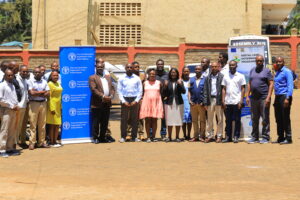

Kisii County hosted Kenya’s national celebrations for World Cleanup Day, bringing together national and county government officials, environmental agencies, development partners, community representatives and residents in a major campaign to promote cleaner, healthier and more sustainable communities.
The celebrations, held under the theme “From Clean Plates to Clean Cities,” placed emphasis on reducing food waste, improving waste separation and recovery, promoting recycling and encouraging communities to take greater responsibility for their environment.
The main event was held at the Kisii Agricultural Training Centre (ATC) Grounds, following a cleanup exercise in Kisii town.
Speaking during the celebrations, Kisii Governor Paul Simba Arati said the County was taking deliberate steps to transform waste management from a disposal-based system into one that promotes recovery, recycling, environmental restoration and economic opportunity.
Governor Arati said the Kisii experience demonstrates the need for African cities to rethink how they manage waste as urban populations continue to grow and place increasing pressure on existing infrastructure.
He pointed to the devastating consequences of poorly managed waste disposal sites, citing the collapse of the Kiteezi landfill in Kampala, Uganda, in August 2024, which claimed 35 lives, as well as the collapse of a major landfill in Conakry, Guinea, which resulted in the loss of 36 lives.
“These were not natural disasters. There was no earthquake, no act of God. These were the consequences of warnings ignored, of waste allowed to pile up year after year until the mountain became a grave,” Governor Arati said.
The Governor noted that Kisii had faced a significant environmental and public health challenge at the former Nyambera dumpsite, which was located within the municipality and surrounded by residential areas, schools and businesses.
Working in partnership with the National Environment Management Authority (NEMA), the Governor decommissioned the Nyambera dumpsite and embarked on an ambitious rehabilitation programme that has transformed the former waste disposal site into Etaya Governor’s Park.
The green public space now provides residents with an environment for walking, relaxation and recreation.
Governor Arati said the transformation of Nyambera reflects the County Government’s broader commitment to integrating environmental conservation into urban development while improving the quality of life for residents.
The County’s journey towards sustainable waste management has involved overcoming significant challenges. Earlier efforts to relocate waste disposal activities to Etora in Bobasi and later to Nyatieko in Kitutu Chache South encountered resistance from residents.
The County subsequently adopted a different approach, moving away from the traditional model of simply identifying new areas for waste disposal and towards a system that treats waste as a potential resource.
A major investment in this approach is the Materials Recovery Facility (MRF) established at the Kisii Agricultural Training Centre.
The facility has the capacity to process up to 50 tonnes of waste daily and includes a Black Soldier Fly unit that converts organic waste into animal feed and organic fertilizer.
Governor Arati said the need for sustainable waste management is becoming increasingly urgent as Kisii Municipality continues to experience rapid population growth.
He said his administration is strengthening waste management infrastructure and systems to ensure that urban growth is accompanied by improved environmental management, cleaner neighbourhoods and sustainable public spaces.
The County’s Kazi Mashinani programme is also contributing to cleaner urban environments while creating income opportunities for residents. Approximately 2,000 men and women are engaged every month on a rotational basis in activities including town cleaning, clearing blocked drainage channels and bush clearing.
Governor Arati said the programme is projected to have benefited an estimated 24,000 residents by next year.
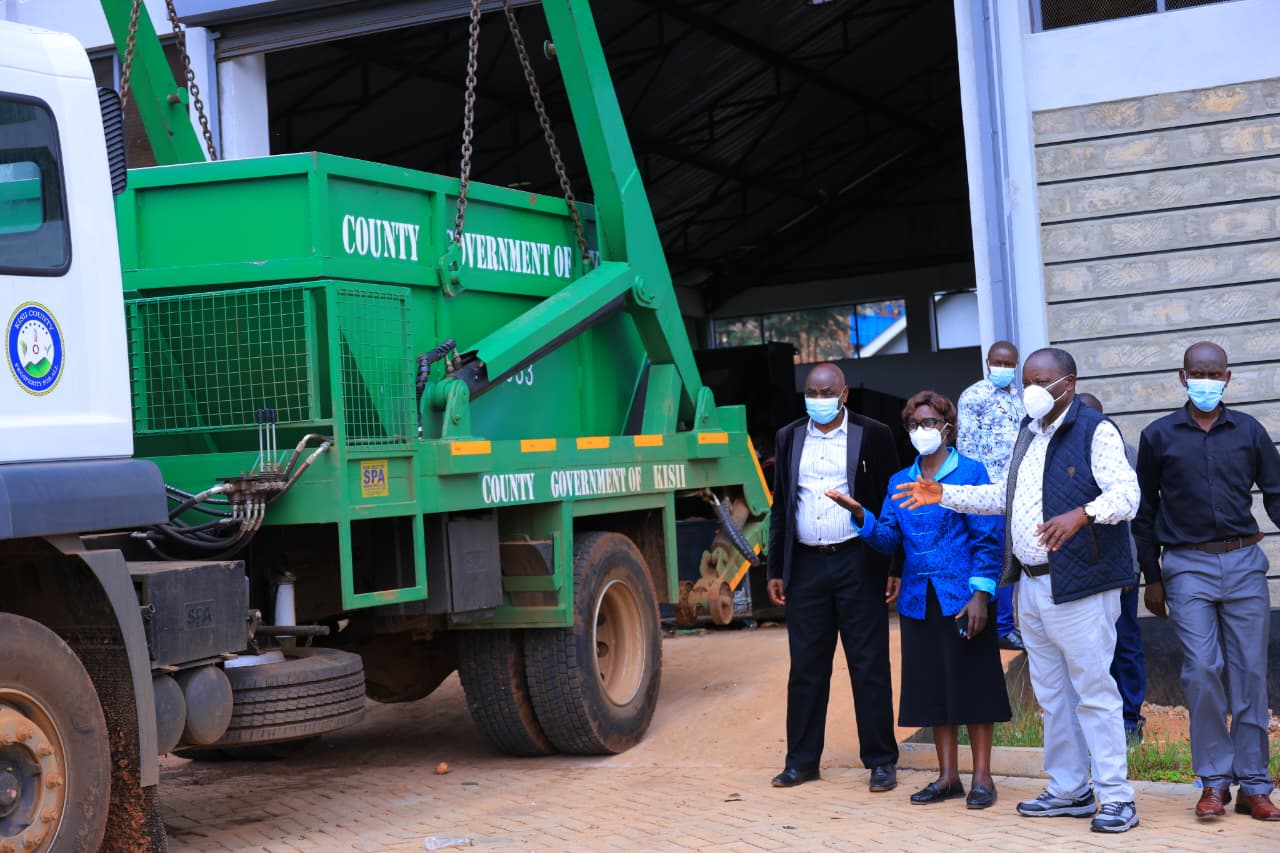
The County has further invested in truck-mounted skip loaders and colour-coded waste bins to promote waste separation at source and improve the efficiency of waste collection.
Ishaku Maitumbi, Head of UN-Habitat’s East and Horn of Africa sub-region, commended Kisii County for the progress made in transforming its approach to waste management.
Maitumbi emphasised the importance of moving away from waste disposal towards systems that prioritise waste reduction, separation, recovery and reuse. He noted that sustainable urban development requires collaboration among national and county governments, communities, the private sector, development partners and other stakeholders.
He also highlighted the potential of waste management to create economic opportunities, particularly for young people, through recycling, resource recovery and other circular-economy activities.
Migori Governor Dr Ochilo Ayacko, who attended the celebrations, also called for stronger cooperation among counties in addressing environmental challenges.
Governor Ayacko emphasised that environmental challenges do not stop at administrative boundaries and require coordinated action by county governments, national agencies, communities and other stakeholders, particularly in protecting shared ecosystems within the Lake Victoria Basin.
The national celebrations brought together a number of national and county leaders and stakeholders, including Broadcasting and Telecommunications Principal Secretary Stephen Isaboke, Controller of Budget Margaret Nyakang’o, NEMA Director General Dr Mamo B. Mamo.
Members of Parliament Charles Onchoke (Bonchari), Zaheer Jhanda (Nyaribari Chache) and Steve Mogaka (West Mugirango) also graced the occasion and called for stronger environmental conservation measures, responsible waste management and greater community participation in keeping Kisii’s urban areas clean.
From the former Nyambera dumpsite to the now green Etaya Governors Park, and from waste disposal to recovery and value addition, Kisii County is demonstrating how environmental challenges can be addressed through stronger systems, partnerships and community participation.